The COVID pandemic has shown us the urgent need to find new ways of living sustainably - to restore the lost balance with nature and the broken health of our planet. Individuals and businesses have turned their eyes on implementing new technologies in order to handle our everyday activities in smart and sustainable ways.
Digitalization gives the opportunity to tackle one of the biggest sources of our negative footprint in nature - the transport system. Along with the ecological effects, the spread of deeptech-based transport solutions such as contactless and automated services improve the levels of customers' security. The pandemic has also accelerated the smart city concept and the green urban living practices with Artificial Intelligence and Big Data Processing as key elements for the success of both trends.
In the second part of our special article, we will present five technologies that have been boosted during the Pandemic in order to respond to the new challenges that we are facing after the Covid-19 outbreak.
Drones
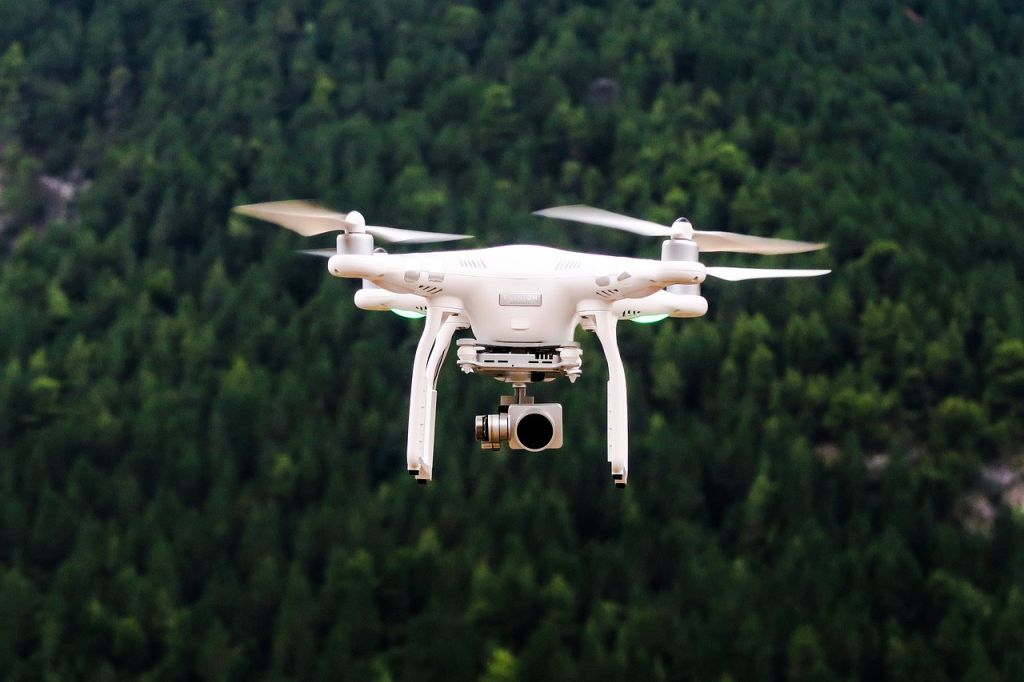
The first implementation of drones dates back to World War I when unmanned aerial vehicles (UAV) technology was created. Till then, the development of drones has experienced an incredible boom and the last few years have been especially important for the global expansion and awareness of its usage. The drones have spread across various sectors of the economy in order to lower costs and improve the quality of some services such as shipping and delivery. Governments have also implemented UAV technology, especially in military activities while individuals have started to use drones for personal benefits - for example, making high-quality video footage during family celebrations.
But drones’ characteristics go far beyond photography and filming. UAVs have become an important part of various important human activities: collecting Information, conducting rescue operations, making the geographic mapping of inaccessible areas, managing monitoring and surveillance control as well as improving disasters and tackling their consequences.
However, the main implementation of drones nowadays is in the military sector where they have reached high levels of adoption. Military usage has become one of the main drivers of the UAV technology evolution and improvement. Drones are used in combat missions, supervision of war areas, and intelligence operations.
In recent years, the UAV technology has spread in various non-military sectors which led to its constant improvements for managing societal and commercial issues. In the next years, it is expected that drones will be able to conduct more sophisticated tasks like monitoring traffic incidents, surveying places, and delivering goods
Drones during the Pandemic
The drones have helped us with overcoming various challenges after the COVID-19 outbreak, including the distribution of medicaments and meals or controlling curfews. The UAV-based solutions have also shown very positive results in delivering supplies without human, face-to-face interactions during lockdowns when there was an urgent need for social distance and isolation for contaminating the virus.
Driverless Cars
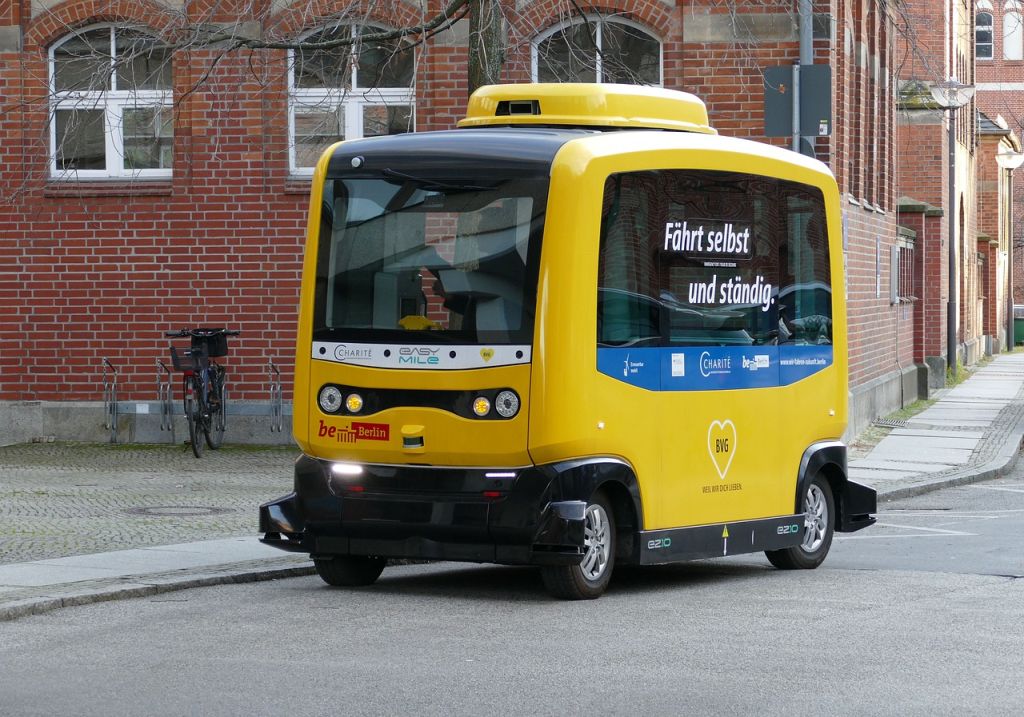
Driverless cars, self-driving cars, or autonomous vehicles are expected to be the next new normal in the transport system. This technology is in an experimental phase in several countries including the US and the UK, where it is legal to conduct tests with driverless cars and therefore, those vehicles are becoming well-known among society.
Driverless cars use sensors that can analyze the environment in real-time and thus moving with less or no human control. Those vehicles also use GPS and advanced systems to choose the best paths and directions.
The new era of driverless cars is expected to bring new measures not only related to regulation and safety control. Analysts predict leading global carmakers to join forces in order to conduct more deep and significant research and tests in an attempt to commercialize those vehicles.
Driverless cars are expected to make changes in the model of car ownership. As self-driving vehicles are on the top of price lists, their mass adoption could be in taxi services not as personal cars. The popularity of the sharing economy among Millennials and Generation Z is another stimulus for their implementation in on-demand driving business.
Driverless Cars during the Pandemic
After the COVID-19 outbreak people have started to order almost everything online. The need for faster and contactless delivery services makes driverless cars more popular although still with a lower level of mass adoption. Moreover, the hygienic safety requirements in taxi services have led various big companies to analyze the economic benefits and costs of implementing self-driving vehicles.
High-Speed Railway
High-Speed Rail (HSR) is a type of transport that is much faster than the normal railway. It uses a new and developed engine applied on a specifically dedicated track. The train lines that reach a higher velocity than 200 km/h are considered High-Speed Rail. In Japan, some trains exceed this speed thanks to the magnetic levitation technology that manages to reach the velocity of 600 km/h. In Europe, there are also HSR systems that mount multiple engines on different axles or carriages reaching around 400 km/h.
Investments in High-Speed Rail could create new and alternative ways of transportation for humans and commodities. HSR’s implementation could give new life to public transport by connecting very remote geographic points and thus, fulfilling an important societal role.
The most significant effects of High-Speed Rail are its ecological benefits. As the railway is one of the cleanest transport systems, HSR mass adoption could lead to significant reductions in carbon footprint by replacing some aviation services very successfully in terms of speed and quality.
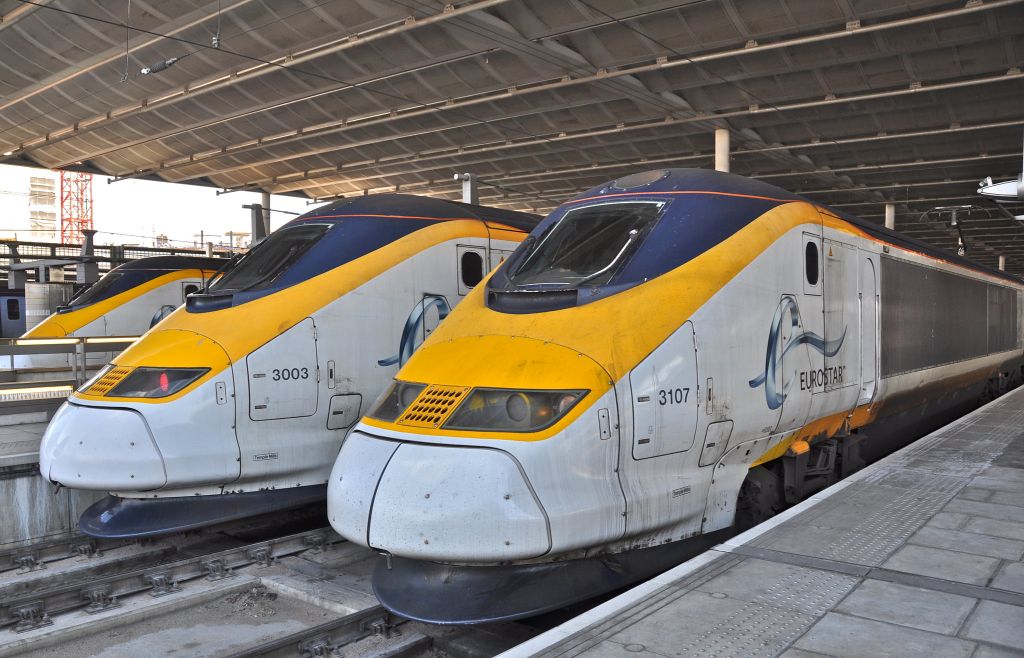
Three high-speed Eurostar trains at St. Pancras International station, London. Eurostar is the only high-speed train that directly links the UK to France and Belgium via the Channel Tunnel. Image: DSC_6514 - Version 2, CC BY-NC-SA 2.0.
High-Speed Railway during Pandemic
The pandemic has led to significant interest in the HSR’s implementation due to its transport efficiency, security, reliability, and availability as well as its minimal environmental impact. Climate change and COVID-19’s consequences could push the High-Speed Rail’s investments for the development of structures that allow intensive public transport usage and keep a proper speed of reaching locations but in a more secure and sustainable context than the airplanes. High-Speed Railway technology can also easily implement an autonomous train system taking advantage of the fixed tracks.
Augmented Reality
“Augmented reality, in computer programming, is a process of combining or “augmenting” video or photographic displays by overlaying the images with useful computer-generated data. The earliest applications of augmented reality were almost certainly the “heads-up-displays” (HUDs) used in military airplanes and tanks, in which instrument panel-type information is projected onto the same cockpit canopy or viewfinder through which a crew member sees the external surroundings,” as explained in encyclopedia Britannica.
Augmented Reality (AR) interacts actively with the surrounding environment by creating a computer-generated supplement to the real world that provokes all our senses giving a completely immersive life experience. With AR, it’s possible to include in our world digital augmentations that are visible from the displays of smartphones or more comfortable wearable devices like glasses or helmets. This technology can be basically much more disruptive than virtual reality because it doesn’t create a separated world generated from scratches but it adds to our world digital elements creating intense life gamification.
Augmented Reality has been implemented in various societal and business sectors as well as for personal usage. In the museums, for instance, the technology lets the customers interact better with the expositions giving them additional computer-generated visuals, sounds, and other sensorial elements. AR has also been successfully implemented in healthcare: for example, it can project the three-dimensional body area very precisely during surgeries.

Augmented Reality during the Pandemic
The AR solutions have become very attractive for the retail sector as lockdowns caused the migration of lots of trade services entirely online. Augmented Reality gives an opportunity for a contactless experience of shopping with a virtual solution called “try-before-you-buy” that allows the customers to try online their clothes or accessories using the projection and the overlaying system. AR-based features have also been implemented in “testing” furniture in homes with just several clicks.
Analysts expect AR usage to become essential for the retail sector in the future and more generally for the entire shopping industry. Augmented Reality could also support a new way of shopping with a more gamified and more immersive social experience for the people.
Smart City
Every year the global percentage of people living in cities is increasing. In 2018, 74% of Europe's population live in cities, emphasizing the need for creating a new system that can manage all administrative and commercial needs, on one hand. And on the other - it guarantee safety and security as well as living in a balance with the environment. One of the new tech-based solutions that offer answers to those challenges is the so-called Smart City concept investments which are predicted to double by 2025.
What can a Smart City offer?
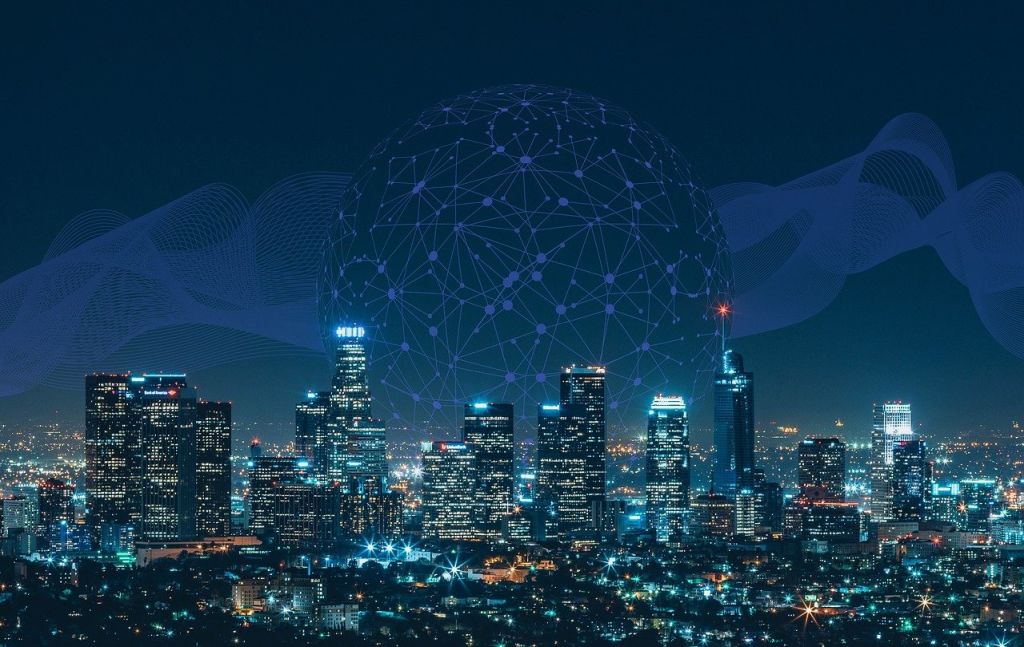
Smart City is a place where smart technologies work together to give to people intelligent solutions for everyday challenges. In the Smart Cities, technologies such as the Internet of Things (IoT) and 5G are being implemented along with the four previous tech solutions, mentioned in the article above. Tech solutions also can improve interactivity and availability of urban services in order to provide new and advanced features like smart grids or traffic management. Other goals of the Smart City are to lower the distance between the government and the citizens as well as to guarantee a good level of healthcare services.
Smart City during the Pandemic
The COVID-19 outbreak has affected the urban living and environment with the migration to the home office and restrictions on the movements. The health crisis has also shown the limits of containing the spread of the Covid-19 virus, especially monitoring the movements. However, digitalization brings some solutions including using real-time data and controlling the crowd with video surveillance, advanced public transport, and intelligent traffic management. Therefore, many digital technology innovations have experienced remarkable growth during the pandemic.
But one important question remains: how will we guarantee the people’s rights and freedoms?
The Smart City concept gives some answers as it relies on regulation and legal frames.
Analysts expect that cities will not come back to “normality” before the pandemic and they will be transformed in a new, smart way by the digitalization and new concept for living sustainable. The post-COVID world could bring a new futuristic look from many different points of view. The pandemic has accelerated the spread of new technologies and boosted the investments on many existing ideas which stayed too long unfinished.
What can be the benefits of such a significant technology development movement in the following years? How will we live in the near future and how digitalization can affect our lives?
What is your opinion? Tell us by commenting on our social media channels: Facebook, Instagram, or Twitter.
The article is part of MOVE.BG initiative EDIT - Economic Development via Innovation and Technology. Read the first part here.

