Bulgarian entrepreneurs, civil society experts, and researchers continue to develop world-class green innovations that have the potential to contribute to the prosperity of the economy and society and to the protection of nature. This is shown by data from the second edition of the National Survey "Green Solutions from Bulgaria 2025" (link here in ENG), which MOVE.BG has presented at the "Re:Think Green" Conference. The survey covers startups, civil society initiatives, and research projects that work on solutions in support of sustainable development and green transformation.
The study shows that, on average, over 40% of green startups, civil society initiatives, and research projects create unique innovations on a global level that offer solutions in key areas of sustainable development, such as combating climate change, developing a circular economy, and protecting natural resources. However, green innovators continue to face a number of challenges that hinder the realization of their potential - difficulties with financing, limited human resources, access to international networks, lack of interest from institutions in green innovation and green development, as well as challenges in cooperating with big business.
The study also shows that the environment for the development of green innovations has not improved compared to last year, when the first edition of "Green Solutions from Bulgaria" was conducted - the challenges continue to be ignored by representatives of state institutions at the national and local levels.
The data from this year's study is summarized in a report that is available online (link here in ENG) and includes recommendations for overcoming the main challenges, such as creating a special fund within the Fund of Funds to support green startups, the creation of a National Green Fund to provide stable and predictable national funding for civil society organizations, and the development of a sustainable model for public-private partnerships for the development and implementation of research innovations with the participation of the state and business.
Re:Think Green: green development as a matter of national security
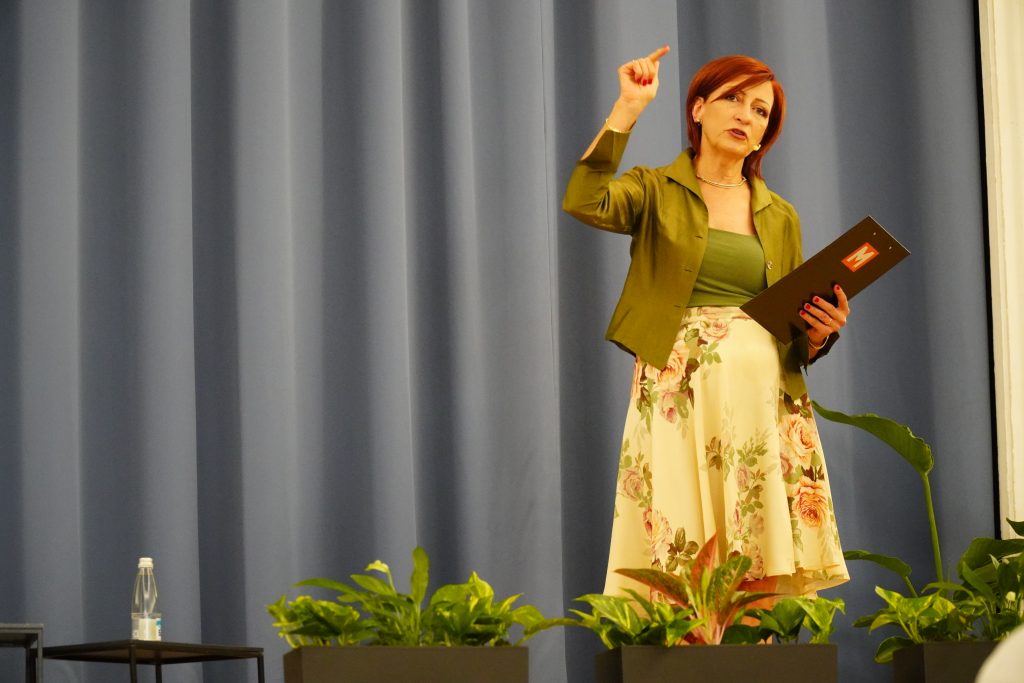
The results from the "Green Solutions from Bulgaria 2025" National Survey were presented and discussed at the "Re:Think Green" conference, which also focused on rethinking green policies as policies that are not only related to climate change but also to ensuring national security.
Sasha Bezuhanova, founder of MOVE.BG and initiator of "Green Solutions from Bulgaria," said:
“Climate change, accelerated by human activity, is leading to a significant reduction in natural resources.
Over the past 50 years, we have lost 73% of wild animals, and in 2024 alone, 30 million hectares of forest were destroyed by fires and deforestation.
Fires, droughts, and natural disasters destroy infrastructure, block supply chains, and paralyze social and health systems.
This poses a significant risk to quality of life and the economy, given that more than half of global GDP is moderately or highly dependent on nature. In the EU alone, economic losses due to climate and weather disasters over three years amount to over €160 billion.
It is no longer possible to deal with these life-threatening and economically damaging circumstances using conventional means. Modern, entirely new technological solutions are needed to limit the effects of climate change and ensure adaptation to the new climatic reality.
Such developments are being made in Bulgaria. Their creators are innovative entrepreneurs, scientists, and environmentalists.
We conducted the study "Green Solutions from Bulgaria 2025" to show with data what solutions Bulgarian innovators in the field are creating and to explore opportunities for accelerating the market realization of their ideas.
We believe that they are an asset that needs to be prioritized and supported, and that they are an important key to the prosperity of our country and Bulgaria's contribution to solving the global challenges related to the loss of nature.”
Green solutions from Bulgaria: the results
The data from the study was presented during the conference by Karina Angelieva, innovation expert and author of the report "Green Solutions from Bulgaria 2025." The methodology of the study is a direct online survey conducted by the Nasoka agency, and the total number of completed questionnaires is 135. In the following lines, we present a summary of the main data for the three groups of respondents.
Green startups: great potential, scarce funding
Startups are the most dynamic part of the green innovation ecosystem in Bulgaria. The survey covered 55 companies of this type, which accounted for 40.7% of all respondents. Most of them typically belong to the category of micro-enterprises: 80% of the respondents have up to ten employees, while 52.7% have teams of one to three members. This profile implies a limited capacity in terms of resources and expansion but, at the same time, a high level of flexibility and adaptability to new trends and market conditions. These companies operate mainly in the following spheres: circular economy and waste management (60%), energy and energy efficiency (32.7%), climate solutions (30.9%), nature-based solutions and ESG policies (23–27%).
In terms of the type of innovation, over 38% of green startups develop so-called disruptive innovations - solutions that can change market logic and industry structure. 21.8% develop innovations of an interdisciplinary nature, and about 2% work on social innovations. Just over 38% of respondents among startups build on existing solutions, making them more efficient or accessible. Almost half of startups (49%) develop innovations simultaneously in new products and approaches/processes, 27% only in products, and 16% only in services.
Financing is a major problem for the development of green startups - only 21.8% have attracted VC capital, while 58% rely on their own funds. In terms of capital raised, 41.8% have not been able to attract any external funding at all, 34% have raised capital of up to €100,000, and only 12.8% have raised more than €1 million. Financing problems hinder the development of the potential of green startups, and therefore, MOVE.BG is once again calling for several key measures, including: the creation of a green fund within the Fund of Funds for targeted investment in green innovation; introducing green verticals in venture capital funds; and introducing a mechanism to encourage banks to support the development of green manufacturing innovations on favorable terms.
Green civil society initiatives: small teams, great ideas
Similar to SMEs, many green civil society organisations are small in size. Close to one quarter of them (22.9%) operate entirely on the basis of the volunteer principle without any hired staff. More than 70% of the organisations in total have up to 10 employees, which raises the issue of their capacity to develop sustainably and to produce a lasting impact. In terms of thematic focus, most green civil society organizations work in the field of education - this is the most common activity, cited by 60.4% of green NGOs. A significant proportion are involved in initiatives related to climate (52%) and environmental protection, as well as the implementation of nature-based solutions (47.9%).
Civil society organizations are establishing themselves as an innovative sector, albeit not so much in terms of technological or market products, but rather through social and organizational models. Over 38% of them develop social innovations related to new forms of civic participation, volunteering, or changes in public services, 14.7% experiment with interdisciplinary solutions, and 20.6% create breakthrough innovations. Just over 26% build on existing innovative models.
Funding for civil society organizations remains a major challenge. More than half of respondents (54.2%) rely on European grants and projects, and a similar proportion (56.3%) relies on their own funds, fundraising campaigns, and sponsorships. Partnerships with businesses are underrepresented (16.7%). The lack of long-term and stable funding is the most frequently cited barrier – 70.8% of respondents highlight it as a critical problem that hinders planning and sustainable development, followed by a lack of understanding from institutions and a lack of interest from the general public. In response to these challenges, the sector has formulated clear recommendations – the idea of creating a National Green Fund (70.8%) to provide stable and predictable national funding is the most strongly supported. Other measures supported by respondents include the creation of local advisory councils (68.8%), the creation of a national co-financing mechanism (66.7%), and the removal of administrative burdens (54.2%).
Green research organizations: new ideas, limited capacity
Most research projects (62.5%) are implemented by small research teams of up to ten researchers. The typical size of the team ranges between four and ten members (34.4%). In terms of thematic area, the largest number of research projects are concentrated in the field of circular economy and waste management (46.9%), followed by bioeconomy, water and climate (34.4%), energy, agriculture, and food (28.1%), and biodiversity (25%). Besides, there is an increase in interdisciplinary projects combining elements of precision farming, digital technologies, nature-based solutions and sustainable management of ecosystems.
Over 32% of the green research projects that took part in the study are creating innovations in a new field of application (interdisciplinarity), 17.9% are working on breakthrough innovations, and 14.3% on social innovations. Just over 35% of research projects build on known innovations, making them more effective, cheaper, or more accessible. Problems with scientific transfer remain unresolved this year. Only 25% of market-oriented scientific developments actually reach commercialization. Over half (53.6%) remain isolated in the academic sphere.
The main challenges to the development of green research projects are the lack of capacity and experience in transferring innovations to industry - these two points are cited as the main problem by respondents (46.9%), followed by difficulties with financing, weak links between science and business, and insufficient cooperation with state institutions (all three cited by one-third of respondents). In response to these challenges, the scientists who completed the survey recommend introducing measures to stimulate cooperation with business (the measure is supported by 72% of respondents), the development of research capacity (62.5%), and the development of specific skills for the commercialization of research projects (62.5%).
The report "Green Solutions from Bulgaria 2025" includes over 30 recommendations aimed at the three groups of respondents to the survey, as well as at improving the overall environment for the development of green solutions and supporting the green transformation of the country, such as: creating an online platform dedicated to climate and decarbonization policies - for example, a National Climate Portal, where information on climate change and climate policies, how they affect individual stakeholders and municipalities, and what funding opportunities are available, can be published and updated on an ongoing basis.
Check out the report here in ENG.
The results from the "Green Solutions 2025" study were discussed during the "Re:Think Green" Conference, which included several panels with representatives of interested parties - representatives of European institutions, political parties, business, science, and the civil sector. Learn more here in BG.
The "Re:Think Green" Conference is held with the support of Rezolv Energy, Lidl Bulgaria, Yettel Bulgaria, HPE operated by Selectium, Sof-Connect, Spark, UniCredit Bulbank, SCION Society, and goodbag.
View a photo gallery from the conference here.


