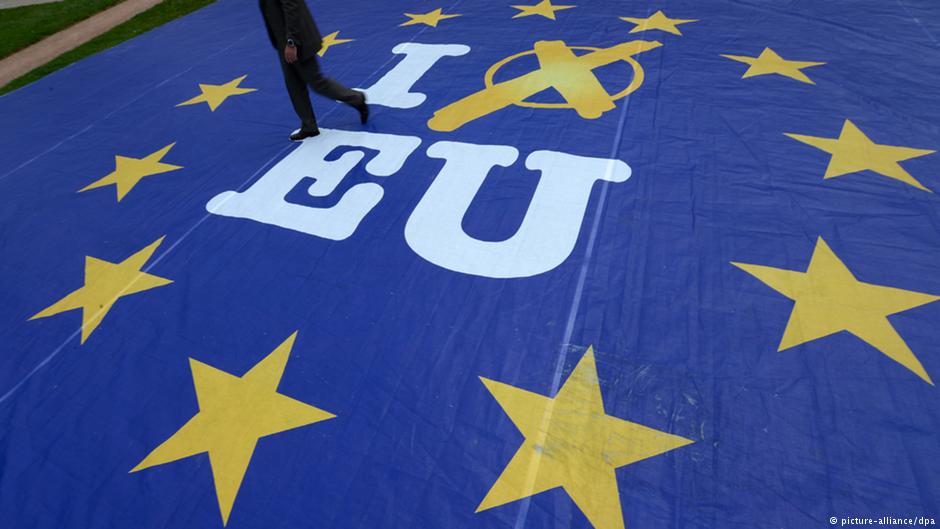
The proposed initiative for reforming the European Parliament and creating Pan-national voting was closer than ever to becoming reality, yet polarised Members of the European Parliament (MEPs) have once again voted against its fruition.
The European Malaise
Since its inception, the EU and its institutions have always adapted, reformed and evolved. This process has reflected factors, such as the changing political and economic reality in Europe, the demands of Member States, the demands of citizens, as well as the power play between the institutions in Brussels. One central question, that has always been at the heart of the European Project, has been how to balance all the competing interests, while at the same time ensuring that its institutions are democratic, transparent and inclusive. To this end, another long-standing question that has given a lot of food for thought to bureaucrats, politicians and academics has been the following: how does one bring the EU closer to the ordinary EU citizens, and how do we engage with people all over Europe more?
One solution that has been offered to this question sounds deceptively simple: setting up and empowering the European Parliament (EP). The only institution of the EU that is directly elected by Europeans, the EP is hailed as the voice of European citizens, as the heart of the EU’s democracy. The EP is said to be the unique link that not only connects Brussels and the citizen but is also the champion that represents and defends his or her interest on the big European stage.
Yet the reality is much more sombre.
European voters have turned up less often to cast their vote for an MEP to represent them, and their mistrust in the Brussels officials has increased. On average, there is also less interest of voters towards European politics and less understanding of what goes on in Brussels. In this regard, national elections take precedence, to which voters pay more attention and believe their vote will have a bigger impact. Thus, the EU is definitely not as close as it aims to be to its voters, and the problem has festered and transformed into a significant cause of concern for Brussels. On the one hand, there is the issue of disinterest or lack of understanding of EU policies, while on the other, there is the perception of lack of accountability of the EU institutions, its activities and staff. This gap between Brussels and the citizen is at the heart of the EU’s legitimacy and communication issue.

Brexit as a window of opportunity
The disillusion with the EU and the critique towards what has been dubbed its “democratic deficit” has been acutely felt in the past couple of years. The most recent pivotal event that has shaken the EU and its ideology has, of course, been Brexit. The need for positive and substantial reform of the EU that can balance the interests of everyone in Europe, thus, became more important than ever. Yet the gloomy cloud of Brexit, which was hanging over the EU, had a silver lining. When the Eurosceptic Brits left the EU decision table, some ideas, that have been previously blocked or left in stagnation due to lack of consensus among the 28 Member States, slowly came back to life. One such idea that has resurfaced and claims to offer a solution to the gap between the MEPs and citizens is that of Pan-European voting lists for MEPs.
The idea was first called for in 1998 and officially suggested through a proposal by a former British MEP in 2011. In 2015, the EP adopted a resolution on the matter, but it was not agreed upon by the Council and not ratified by EU Member States. Back then, however, there was one obstacle to the idea that seemed insurmountable. According to the Treaty of the EU, the maximum number of seats in the EP can be 750 plus one seat for the Parliament’s president. In other words, back in 2011 and 2015, when the idea was pitched, creating a Pan-European voting list meant that the number of national MEPs had to be reduced in order to make space for the Pan-European one: a decision that does not bode well with Member State’s national interests and was thus, almost impossible to pass through.
Yet Brexit seemed to offer a solution to that problem.
When British MEPs leave the European Parliament, it means that 73 seats will free up. The European Parliament has already started the debate on how to restructure the institution in light of this event. So far, the main proposal by the Constitutional Affairs (AFCO) Committee of the EP has suggested that 27 of the formerly-UK seats be redistributed among Member States who are underrepresented in the EP. An additional proposal suggested that part of the remaining 46 can be used for the creation of Pan-European lists, while the others can be kept in reserve in the case of an EU enlargement.
The idea also gained momentum through the vocal support of French president Emanuel Macron and seemed more likely to become a reality than ever. Yet the dividing questions remained: what exactly would a Pan-European look like and would all of the MEPs, Member States and EU institutions agree to the idea? Most importantly, would these new MEPs without borders bring Europe closer to its citizens or distance it?
The MEP 2.0 – yea or nay?
So far, MEPs across Member States are chosen from a national or regional election list, corresponding to a national party. National parties often align themselves with a European political party or group. For example, the European People’s Party (EPP) includes national parties such as the “Christian Democracy Union” (CDU) of Germany and the Bulgarian “Citizens for European Development of Bulgaria” (GERB). If an MEP was to run in a Pan-European voting list, however, it would be up to the European political party (e.g. the European People’s Party, the Alliance of Liberals and Democrats for Europe Party, the Progressive Alliance of Socialists and Democrats and others) to draft the voting lists, and not the national parties.
 Current distribution of MEPs according to European political groups. Source: BBC News
Thus, if future EP elections were to be conducted in such a way, European citizens would be offered two ballots papers at the polling station: one for their national MEP and the other for the Pan-European one. In theory, the Pan-European MEPs would have a Pan-European constituency and would not be bound by national interest. Rather, they would aim to represent a constituency and its interests that crosses European borders and is transnational. As European political parties are meant to represent the interests of European constituencies based on a set of ideals, in the same way, the Pan-European MEP would have to take upon such a role. For example, a potential Pan-European MEP of the “Alliance of Liberals and Democrats for Europe (ALDE)” would share the centre-left ideals, as well as the idea of strengthening cooperation and integration in the EU. At the same time, European parties such as the “Movement for a Europe of Nations and Freedom” (ENF) would also have a right to elect their own Pan-European MEP. The ENF, however, has Eurosceptic, nationalist rhetoric and includes parties such as Marine Le Pen “National Front” party.
In other words...
While a Pan-European MEP would have the opportunity to unite European citizens that support the European Project and give them a voice, he or she could also have the role of uniting Eurosceptics across Europe and giving further representation to citizens who would like to see the end of the EU and integration. Both possibilities have been used as arguments for and against the Pan-European lists by current MEPs. It is noteworthy, however, that so far Eurosceptics in the EP have consistently voted against the proposal, while ALDE and the Greens and S&D are for the creation of the lists. Whichever the outcome in such a case, it would be hard to dispute that, whatever the expressed will of the European citizens is, it will lead to more representation of the citizens and thus, to more democratic legitimacy of the EP.
A central question that remains unsolved is how the transnational lists would be drawn up and how they would ensure a fair allocation of seats. This has led to another concern: that smaller Member States would potentially be under-represented in such lists. György Shöpflin, a Hungarian MEP from the EPP asserts that “If you’re a candidate on those lists it makes no sense to campaign in the small member states, but only in the large member states.” Yet there is no decision yet on how many Pan-European MEPs each Member State would be allowed to have on each list. Further, the French government has already made a concrete proposal on how to address this potential issue.
French Proposal for Transnational lists and fair representation of Member States
- Each list must consist of candidates from at least one-third of the member states in the EU
- The share of nationals from one member state must not exceed 25%
- The first seven candidates on the list must be nationals from different member states
- Lists shall alternate between candidates of different member states
Status quo 1 – 0 Reform
Even with a concrete proposal of how to ensure fair representation across Member States, MEPs remained divided on the topic. On one side of the spectrum, the EPP party strongly voiced their opposition to the idea. In addition to presenting the above-mentioned concerns, the EPP expressed their concern this would create a group of MEPs who are not as accountable since they will not have a defined constituency and would not be held accountable by a national party as well. Not surprisingly, the EPP, alongside the Europeans Conservatives and Reformists (ECR) and ENF voted with a strong majority against the initiative, while S&D and ALDE voted predominantly for it. As a result, the proposal did not pass through with 54% of MEPs voting against the proposal, 41% for it and 5% abstaining.

The vote has led to criticism and disillusionment by those in favour of the reform. Long-standing supporters of the idea, the Young European Federalists (JEF Europe), have described the MEPs vote against the trans-national lists as “disappointing and a huge opportunity wasted” where “some groups have acted against their long-standing pro-European ideals to take sides with the populists and the Eurosceptics.” Instead of preserving the British seats for Pan-European lists, the EP has agreed on cutting down the number of MEPs (from 751 to 705) while redistributing 27 of the British seats to Member States who have thus far been slightly under-represented in the EP. Hence, despite the renewed spark and enthusiasm for the idea to come into fruition, MEPs have once again, voted to preserve the status quo and ultimately, to preserve the national party-centred format of their election for the upcoming 2019 European Parliament elections.
The decision is still up for debate in the European Council later on this month, yet it is highly unlikely heads of states would unanimously vote contrary to the position of the EP. Supporters of the idea, such as Mr Macron, have restated their intention to continue pushing for the reform. Nevertheless, it is clear that, despite the unique window of opportunity provided by Brexit after 20 years of the controversial reform being debated, the time for Pan-European voting lists for MEPs has yet to come.

