
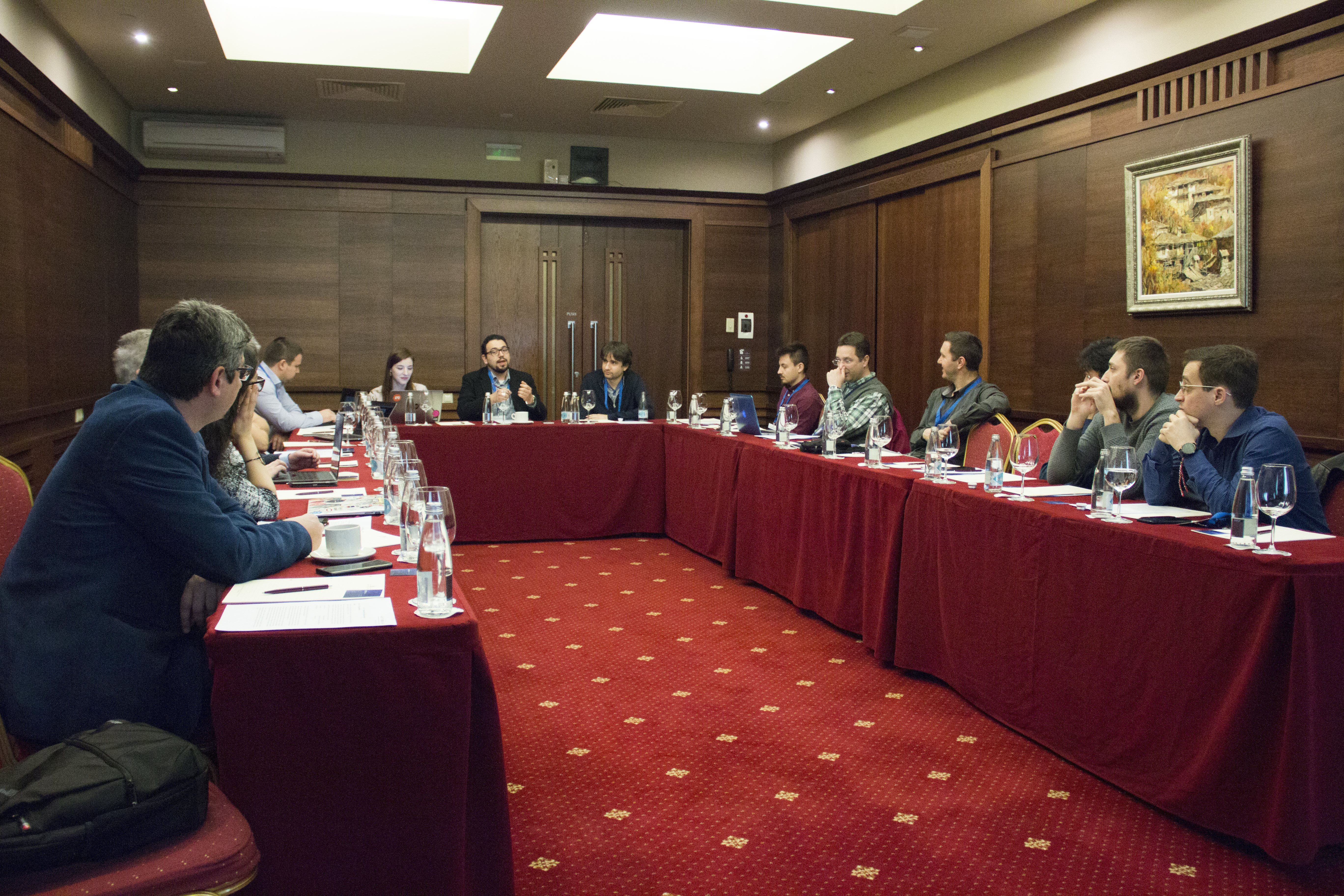
MOVE.BG and Hanns Seidel Foundation, in partnership with the Bulgarian Center for Women in Technology (BCWT) and the open network EDIT, organized the first of its kind Hack the Balkans Unconference on 12th March 2018 in Sofia. The event was another step from the Pan-Balkan Initiative for Digital Cooperation, launched at the EDIT4Tomorrow International Conference on 23 November 2017 in Sofia.
Hack the Balkans has brought together experts in the three key areas of cooperation
Developing start-up ecosystems, supporting women's participation in ICT and cyber security. Representatives of European organizations, Bulgarian governments, digital leaders from the Western Balkans and Bulgaria discussed actionable solutions and cooperation initiatives to support the development of the digital economy.
The Working Group on Digital Development through Entrepreneurship, Innovation and Digital Skills
It has focused its efforts on the collaboration in support of startup ecosystems and building synergies in innovative products development and testing capabilities. According to the participants, the interconnections between the different actors in the region are particularly necessary. Creation of a platform for collaboration, the subsequent formulation of a shared Balkan mission, and, last but not least, efficient communication of the capacity and investment opportunities of the Balkan region, were considered essential. Contribution to the discussion gave the director of the European Association of Development Agencies Esteban Pelayo, the senior advisor and political expert at META Group Anita Tregner-Mlinaric, the founder and chair of the Board of MOVE.BG Sasha Bezuhanova.
The strong participation of women in the ICT sector is among the main factors that guarantee the efficiency of the innovative economy.
The role of women entrepreneurs in the Balkan countries and the economic benefits of their involvement were in the focus of the second working group. According to Marie-Elisabeth Russling, CEO of Business Angels Europe, it is timely to draw from this momentum and build from all stakeholders, as "policy makers in the region have such a wealth of expertise, motivation, ideas to draw from".
 Hack the Balkans
The third working group came up with 14 proposals for enhanced cyber-security, both focusing on on private initiatives and possible public-private partnerships and addressing the public sector in particular. Among those 14, there were short-term recommendations, such as the introduction of mandatory checklists for network and information security, and medium-term such as the awareness-raising campaigns, capacity building and education, skills training, including both citizens, private actors and civil servants, and more budget resources for security in public IT systems. In the long-term the group insisted on legal changes defining a better legal basis for cybercrime, including in international context, employing volunteers for IT security, especially in e-government applications, and measures, stimulating the development of private networks and cooperation institutes.
Conclusions and policy recommendations outlined during Hack the Balkans will be set in a special report to be used as a reference in the subsequent stages of the development of the Pan-Balkan Digital Initiative.
The next event on the priorities of digital agenda with a particular focus on the role of women in the digital economy is to be held on 12th April in Sofia and is organized by the Bulgarian Center for Women in Technology (BCWT) in partnership with the Ministry of the Bulgarian Presidency of the Council of the European Union and European Commission.


