MOVE.BG has published a special report, "Mission Green Innovation: A Prosperity Compass," which contains over 200 ideas for developing green innovation as a path to positive public development. The recommendations in the Compass are based on the ideas of 50 leading experts, who MOVE.BG brought together to formulate systemic solutions for the development of green innovation.
The five stops in the Compass
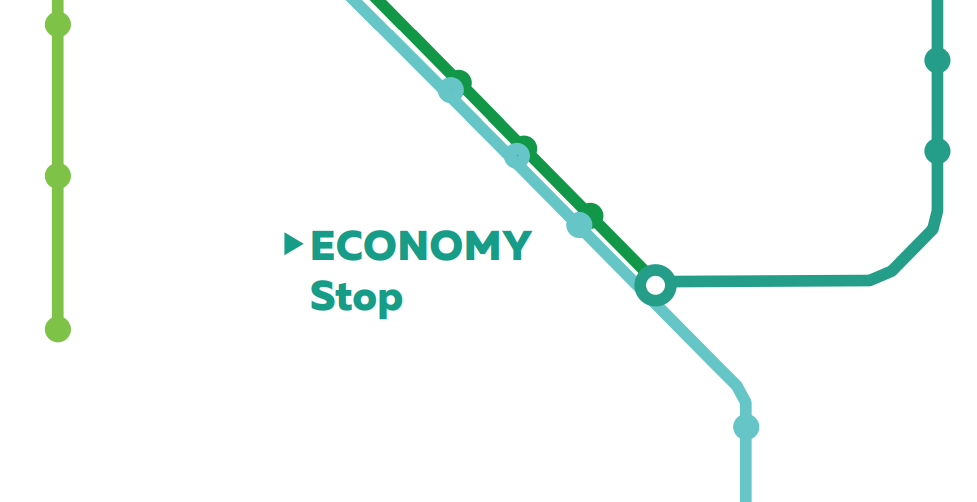
The Compass includes five stops on the road to public prosperity with the help of green innovation: Democracy, Education, Economy, Municipalities, and Finance. Each stop presents the ideas of leading Bulgarian experts with proven experience in the fields of science, business, sociology, the civil sector, the media, as well as representatives of political parties and the financial sector.
Today, we present the ideas from the Economy Stop, which is dedicated to greening the economy and developing green entrepreneurship. This stop presents ideas for increasing competitiveness through innovation and putting Bulgaria on the map of the economy of the future, which is green and digital.
Economy Stop
The following experts took part in the panel dedicated to the economy and green development:
- Associate Professor Marina Stefanova, PhD, Deputy Dean for Sustainable Development, Support and Involvement at the Faculty of Economics and Business Administration of Sofia University St. Kliment Ohridski, Executive Director of ESG Lab and ESG Academy, Panel Moderator
- Bogdan Bogdanov, Member of Parliament for We Continue the Change-Democratic Bulgaria, Minister of the Economy and Industry (2023-2024), Executive Director of InvestBulgaria Agency (2022-2023)
- Gergana Sazlaykova, Consultant, New Markets and Strategic Partnerships, Rezolv Energy (2024-present); Deputy Director, Economic Fundamentals Initiative (2019-present); Business Development and Partnerships, Video Recruit (2012-2018); Consultant in various sectors, AT Kearney (2007-2012)
- Maria Alexandrova, Manager of innovation and sustainability projects at Nasekomo startup
- Marin Marinov, Expert at MOVE.BG
- Nadia Hristova, Expert in economics and finance, Deputy Minister of Innovation and Growth (2022)
The experts participated in their personal capacity rather than as representatives of the institutions or organisations where they worked as of January 2025.
Before we present the ideas of the experts, let us have a look at this topic of the panel and the place of green development in it.
Green development and the economy: why do we discuss them together
As mentioned in the Introduction of this Report, green innovation plays a key role in the attainment of the objectives of the three pillars outlined in the Draghi Report and the EU Compass to regain competitiveness and secure sustainable prosperity: closing the innovation gap, a joint roadmap for decarbonisation and competitiveness, and increasing security, including security regarding the effects of the climate crisis. Therefore let us clarify green innovation in a couple of sentences.
Green innovation: importance
Green innovation or eco-Innovation is any form of innovation resulting in or aiming at significant and demonstrable progress towards the goal of sustainable development, through reducing impacts on the environment according to the definition by the European Commission.
“Eco-innovation needs to be accelerated in a way that boosts resource productivity, efficiency, competitiveness and helps to safeguard the environment. More and more severe environmental challenges and resource constraints have led to growing worldwide demand for environmental technologies, products and services and have facilitated the emergence of green industries”, as stated by the EC in the Communication on the Eco-Innovation Action Plan which continues as follows:
“Accelerated market uptake and dissemination of eco-innovation will lead to improved environmental performance and resilience across the economy being at the same time cost-effective and good for business and society as a whole.”
What happens in Bulgaria?
Bulgaria ranks last in terms of the EU Eco-Innovation Index (Eco-Innovation Index 2024) which measures eco-innovation input in business, society and the public administration, as well as it promotion and support at the scientific, business and government levels. Both in 2014, when the index was published for the first time, and in 2024, Bulgaria ranked the lowest. Despite the significant progress, it is insufficient to improve the country’s performance in comparison to EU average levels. The bottlenecks for the country are the low levels of government expenditure and support for promoting research and innovation in the field of green technologies, the small number of eco-innovation patents, and the high resource intensity of the economy.
Bulgaria has the most resource-intensive and the most energy-intensive economy in the EU: Bulgaria’s economy consumes 3.5 times more energy resources than the EU average. This means that, at the starting point, the products and services of the Bulgarian economy are at least 3.5 times less competitive than the European ones.
The three biggest sources of greenhouse gas emissions in Bulgaria are the energy sector, manufacturing, and transport.
Effective management of energy resources in the industrial sector can bring about substantial energy savings. The modernisation of production technologies and the introduction of energy-efficient machinery can reduce energy costs and carbon emissions. According to a report by the European Environment Agency, energy efficiency improvements and the reduction of industrial emissions are crucial for the attainment of the EU goal of reducing greenhouse gas emissions.
On the other hand, only 5% of all materials used in Bulgaria come from recycling and reuse (secondary materials) compared to the EU average of 11.8% and to over 30% in the lead country, the Netherlands. This is seen in the most recent data published by the European Environment Agency in January 2025. The EU goal is to double the circularity rate (recycling and reuse) by 2030.
Urgent measures are needed for the greening of the economy and the development of green entrepreneurship (green startups).
The data from the first national survey of green initiatives, Green Solutions from Bulgaria 2024 by MOVE.BG suggests that 42% of green startups develop innovation at a world level. However, green innovators encounter numerous challenges in their development according to the findings of the survey. Over 40% of startups have an average staff of three persons, which is a significant barrier to unleashing their full potential. Furthermore, almost 70% of green startups do not collaborate with the government for the development of their projects. Besides, more than 87% of green entrepreneurs rely on the Bulgarian market and encounter difficulties in reaching international markets.
The opinion of experts
What happens to the economy and green development in Bulgaria?
This section of the Report presents a summary of the opinions which experts expressed in the panel discussion dedicated to the greening of the economy and the development of green innovation/green entrepreneurship.
The ideas are summarized and grouped together by the team of MOVE.BG without any claims that they have been approved unanimously by all participants in the panel.
Challenges
List of some major challenges as pointed out by the participants
- Lack of collective thinking and acting – individual business operators are atomized and encapsulated; they do not know each other. The lack of collective thinking and acting impedes the unleashing of the national economic potential
- Lack of motivation and initiative – the overwhelming apathy and aloofness demotivate people, affecting their business initiative
- Disturbed dialogue between individual social groups – the lack of dialogue hampers economic development and the implementation of climate policies because there is isolation, silence and lack of cooperation instead of an atmosphere of understanding and listening to each other
- Bulgarian products and services are not recognized as a synonym of quality abroad
- Lack of a national vision on Bulgaria’s place and role in the European Green Deal – lack of vision on Bulgaria’s role in the EU long-term programme for green transformation and economic prosperity and the political and business levels. This prevents the country and its economy from making use of the opportunities offered by EU policies and ensuring its competitiveness on the way to net zero economy and society by 2050, a target that has not been changed by the new European Commission and the leading economies in the European Union. Thus Bulgaria is running the risk of lagging behind in its economic development and even drop out from the economy of the future
- Lack of interaction between representatives of various economic sectors – a challenge that impedes the coordination of actions by representatives of Bulgaria’s economy
- Lack of relationships between representatives of big business in various industries
- Lack of relationships between big business and startup entrepreneurs
- Lack of interaction between business and the other social groups – there is no mechanism in place to communicate and get familiar with each other
- Lack of a policy implementation mechanism – this problem affects all sectoral policies, including climate policies and green development policies
- Lack of a mechanism to design common measures with the business sector – the government does not seek the business sector as a partner in drafting measures; the end result is presented instead and only afterwards feedback is expected (via public discussions). This model of interaction does not engage businesses sufficiently so that they can claim ownership of policies, including green development policies
- Unawareness of the functioning of the European Union among businesses – there is lack of knowledge about the role of individual EU institutions, the participation of government representatives in the EU decision-making mechanisms, and the implementation of the EU legislation
- Unawareness of the benefits that green development could bring among small and medium-sized enterprises – SMEs have negative attitudes to the targets of the European Green Deal because they are unaware of the need for and, most of all, the benefits from green policies for businesses and for improving the competitiveness of enterprises
- Lack of information at the enterprise level about the meaning of “green energy” and “decarbonisation” – businesses do not want to decarbonise because they are not familiar with the benefits of the process for their competitiveness
- Lack of data on the green innovation potential in Bulgaria – no data is available on the green innovation potential by sectors. This is a barrier to the development and implementation of policies at the central and local (municipal) government levels
- Obsolete and inefficient model of traditional professional associations
- Lack of a corporate mechanism to apply the good practices of parent companies – there is a mismatch in green policies and their implementation, including good practices in green transformation, between head offices of international corporations and their local subdivisions in the country
Solutions Compass
Ideas of the experts on the greening of the economy aimed at improving the competitiveness, sustainability and viability of Bulgarian companies
- Make the greening of the economy an overarching vision on the competitiveness of the country – this vision should be reflected in all strategic documents and objectives
- Couple decarbonisation targets with the real business benefits/goals to increase competitiveness – this vision should be reflected in all strategic documents and objectives
- Establish a National Green Development Board (joint proposal of the panels of the World Café) by the end of June 2025. The Board should be independent and comprised of scientists, representatives of the civil society sector, businesses and the state (central government and local authorities). It could be established at the Council of Ministers by an Act of Parliament rather than by secondary legislation such as an ordinance of the Council of Ministers to ensure its independence and viability and to avoid repetition of the inefficiency of the EU Green Deal Advisory Board (GDAB)
- Develop a national vision on Bulgaria’s green transformation and active participation in the European Green Deal by the end of September 2025. The vision should be drafted by the National Green Development Board described above
- Develop an industrial development and decarbonisation strategy by the end of December 2025. The strategy should be drafted by the National Green Development Board
- Introduce a common denominator for energy security and national security in this strategy – energy security through innovation should become the main pillar of competitiveness. Resources for energy efficiency should be earmarked for the implementation of specific measures
- Design financial packages for energy security and competitiveness at the Bulgarian Development Bank and introduce them in the autumn of 2025
- Set up municipal/regional energy efficiency clusters by the end of September 2025. The clusters should be established by the National Green Development Board with the support of regional governors and the National Association of Municipalities in the Republic of Bulgaria. Provide them with sufficient expertise and an action plan with specific measures covering the 2026-2030 period
- Reform the approach to green development measures and programmes by the end of October 2025. More emphasis should be laid on the implementation of projects and their effects rather than on reporting, which takes a lot of time and human capacity. The reform package should be prepared by the National Green Development Board
- Carry out a public awareness campaign on the opportunities created by green development by the end of 2025. The National Green Development Board should prepare and carry out the campaign. It should cover measures to communicate EU policies and their significance for businesses. The preparation of the campaign should involve representatives of the Ministry of the Environment and Water, the Ministry of Regional Development and Public Works, the Ministry of Energy, the Ministry of Innovation and Growth, the Ministry of the Economy and Industry, the Ministry of Agriculture and Food, the Ministry of Health, the National Association of Municipalities in the Republic of Bulgaria, scientists, representatives of the civil society sector, communication and digital storytelling experts
- Develop a roadmap with industrial development and decarbonisation measures (2026-2050) by the end of March 2026. The roadmap should be drafted by the National Green Development Board
- Plan communication measures for each group of measures in the roadmap
- Introduce a special section on resource efficiency measures in the roadmap
- Introduce a special section on energy efficiency measures in the roadmap; develop a programme with specific measures for energy efficiency of the economy
- Introduce a special section on industrial symbiosis measures in the roadmap
- Introduce a special section in the roadmap on measures to develop sustainable farming, including measures to support small and medium-sized farmers
- Introduce a special section in the roadmap on measures to rehabilitate state-owned companies. The state should step in as the owner to take control of the management and implement the necessary rehabilitation reforms, providing the relevant human and financial resources for the rehabilitation. After the state-owned companies are stabilized, their listing on the stock exchange could be considered individually or in a cluster to attract private investment and professional management. Then these enterprises could join the implementation of key measures aimed at green development
- Introduce a special section in the roadmap on measures to involve industrial parks in energy transition policies – industrial parks face a problem with the lack of capacity of the energy system. Therefore public-private partnerships are needed, e.g. installation of modern photovoltaic systems on adjacent land which could still be used for farming but they could be able to sell the energy generated in the park at lower prices because there would be no transmission charges. This is a win-win situation for both local producers and industrial parks that will save resources for other initiatives by using renewable energy sources
- Introduce a special section in the roadmap on measures to develop public-private partnerships for decarbonisation with mechanisms to protect the public interest and to ensure long-term investment
- Introduce a special section on digitalisation measures in the roadmap – targeted measures are needed to support the digitalisation of industries by presenting digital solutions and the ways of their implementation to businesses
- Introduce a mechanism to supervise the implementation of green development measures. The mechanism should be ready by the end of 2025 and set into operation on 1 January 2026. It should be drafted by the National Green Development Board and introduced in all institutions responsible for the implementation of green policies
- Introduce an effective investor certification mechanism to remove red tape by the end of October 2025. The Ministry of the Economy and Industry should draft the relevant legislative package and submit it to the National Assembly
- Deploy an effective administrative services mechanism for businesses by the end of October 2025. The mechanism should be drafted by a working group at the Council of Ministers in collaboration with the business sector. A package of primary and secondary legislative proposals should be proposed to remove any bureaucratic burden. The mechanism should be used to digitalize services in the public administration
- Introduce a tailored approach in the administration. It should be prepared and deployed in the autumn of 2025. The communication with businesses about investment and programme implementation should be based on a tailored approach like the mechanisms used in Germany, France, Spain or the European Innovation Council (EIC). The mechanism should be drafted by the working group described above
- Establish business coalitions of a new type. These coalitions could be set up on the basis of a specific economic activity (e.g. supply chains) or a specific goal/issue (e.g. decarbonisation by 2050 or Bulgaria’s lagging behind according to the EU Innovation Scoreboard). They should be set up through the business self-regulation principle with a mix of sectors and authors/importers of technologies. These associations should hold training seminars on the green transformation and green innovation and share international good practices, including those of parent companies
- Set up a system of facilitating consultants to overcome the problem with the distortion of the objectives and effects of corporate projects and business policies due to the overexaggerated role of consultants, some of whom have no track record. Therefore the self-regulation principle should be applied to set up the mechanism and to draw a list of facilitating consultants
- Develop a programme for financial literacy of the population by the end of June 2025. This is a way to promote investor behaviour and release investment capital which is currently throttled by the fear of people keeping their resources as savings
Ideas of the experts relating to the support for green entrepreneurship
- Establish a National Green Innovation Development Board (joint proposal of the panels of the World Café) by the end of June 2025. it should be set up at the Ministry of Innovation and Growth and regulated by law. The Board should be comprised of representatives of businesses, science, the civil society sector, municipalities, and all competent ministries and state agencies in this area (this is a way to mainstream the topic at the central government level). It should foster the attainment of climate goals through the development of green innovation and explain the importance of green innovation to citizens and businesses
- Analyze Bulgaria’s potential to develop green innovation and draw up a strategy based on the analysis by the end of September 2025. These documents should be drafted by the Green Innovation Development Board described above. Explore EU good practices and whether and how they could be implemented in Bulgaria
- Develop a green innovation development roadmap by the end of 2025. The roadmap should include specific measures by sectors over the 2026-2030 period
- Plan measures in the roadmap to develop an ecosystem for systemic innovation in the green transformation. Bulgaria has a strong entrepreneurial ecosystem, but a further step is needed to reach the next stage of entrepreneurship: innovation for the green transformation which needs a wide scale and hence special measures by the Ministry of Innovation and Growth
- Introduce a special section in the roadmap on communication measures. Business-targeted communication is needed to explain green innovation, why it is necessary and what benefits it would bring to the economy. This part of the roadmap should be updated annually on the basis of an analysis of the effectiveness of communication measures
- Introduce the principle of supporting innovation testing in the roadmap. The government should be open to providing sites for innovation testing
- Set up a permanent voucher system for science-intensive services as part of the roadmap by 2050
- Introduce a special section in the roadmap with measures to provide public funding for field promotion of scientific achievement and studies on decarbonisation and green innovation development. They could reform the existing inefficient system which provides funding only for the development of the scientific product and not for its promotion and uptake
- Introduce a special section in the roadmap with measures for the implementation of new technologies/green innovation in state-owned enterprises, including the reclamation enterprises Ecoengineering-RM EOOD and Eco Anthracite EOOD at the Ministry of the Economy and Industry
- Introduce the principle of matching investment measures with soft measures. The roadmap should include a special section on soft measures. This part of the roadmap should be updated annually on the basis of an analysis of the effectiveness of soft measures
- Establish a national programme to train businesses on green innovation and the functioning of the EU. The programme should be included in the soft measures. It should provide knowledge on green innovation and practical training for the implementation of green technologies
- Establish a national programme to train the public administration on green innovation and the functioning of the EU. The programme should be included in the soft measures. It should provide knowledge on green innovation and its importance, the role of the administration in implementing green policies and supporting businesses, and good practices from other EU Member States
- Develop a campaign to position Bulgaria through green innovation by the end of 2025. The campaign should be organised by the Ministry of Innovation and Growth and carried out in 2026 to attract investors for business in Bulgaria, on the one hand, and to position Bulgarian green innovation abroad, on the other hand. Analyze the effectiveness of the programme and the need for turning it into a permanent mechanism for positioning of the country
- Analyze the administrative barriers to the development of green innovation by the end of October 2025. The analysis should be carried out by the National Green Innovation Development Board
- Develop a roadmap to remove the existing barriers. The roadmap should be prepared by the end of 2025
- Introduce a control mechanism to ensure that financial commitments for innovation will indeed be allocated for developing innovation. The mechanism should be drafted by the end of 2025 and set into operation on 1 January 2026. It should be drafted by the National Green Innovation Development Board and introduced in all institutions responsible for the development of green innovation
- Introduce a mechanism to attract private capital for support to green innovation
- Facilitate the access to funding for green innovation through the Bulgarian Development Bank
- Establish a Green Fund within the framework of the Fund of Funds
- Coordinate the efforts of the Bulgarian Academy of Sciences and universities to develop green innovation in the priority areas set out in the Green Innovation Development Strategy. The Bulgarian Academy of Sciences should become the development hub for SMEs in Bulgaria. Coordination measures should be supported by the Ministry of Innovation and Growth
- Support the participation of Bulgarian institutions in international green development networks through a mechanism at the National Green Development Board. Examples of such initiatives are the Net-Zero Banking Alliance or the Net-Zero Asset Managers Initiative
- Support the participation of Bulgarian companies in international green innovation development through a mechanism at the Ministry of Innovation and Growth for this purpose. Examples of such initiatives are EIC Community, UpLink, and Global Lighthouse Network
- Establish municipal green innovation development boards, bringing together representatives of the business sector, science, the civil sector, and municipalities. The establishment of these boards should be supported by the Ministry of Innovation and Growth and the National Association of Municipalities in the Republic of Bulgaria
The challenges and solutions outlined here are based on the ideas which the participants in the panel generated. The ideas are summarized and grouped together without any claims that they have been approved unanimously by all participants in the panel.
Check all recommendations in the Compass here (in ENG).

Mission Green Innovation
The Compass is part of the Mission Green Innovation, an initiative of MOVE.BG in support of green innovators in Bulgaria. At MOVE.BG, we know that Bulgaria has the potential to be among the green and innovative leaders in Europe. Therefore, we should support the creators of innovation that can change the face of the Bulgarian economy from a resource-based to a value-based one.
Learn more about the various initiatives of MOVE.BG in support of green and innovative development in Bulgaria here (in ENG).


