MOVE.BG has published a special report, "Mission Green Innovation: A Prosperity Compass," which contains over 200 ideas for developing green innovation as a path to positive public development. The recommendations in the Compass are based on the ideas of 50 leading experts, who MOVE.BG brought together to formulate systemic solutions for the development of green innovation.
The five stops in the Compass
The Compass includes five stops on the road to public prosperity with the help of green innovation: Democracy, Education, Economy, Municipalities, and Finance. Each stop presents the ideas of leading Bulgarian experts with proven experience in the fields of science, business, sociology, the civil sector, the media, as well as representatives of political parties and the financial sector.
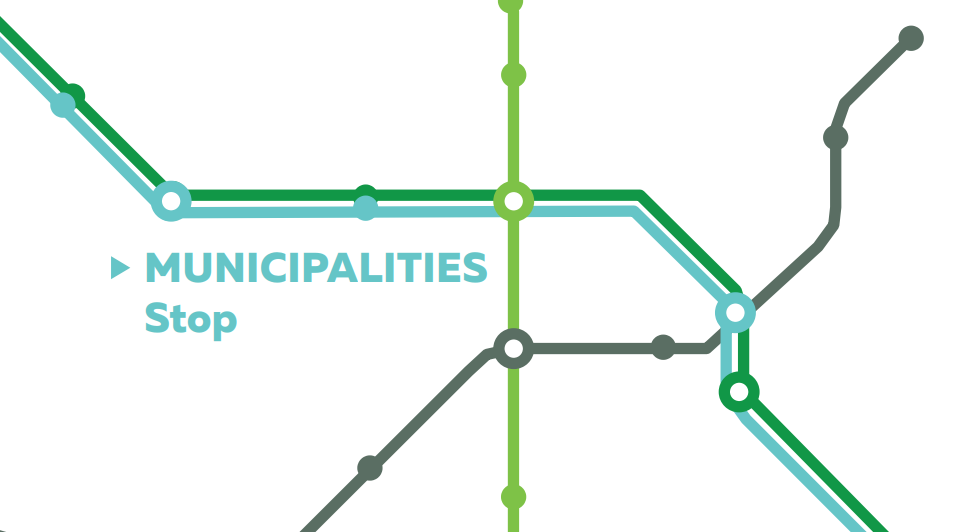
Today, we present the ideas from the Municipalities Stop, which is dedicated to the role of green innovation in the development of our regions. This stop presents ideas for the prosperity of municipalities through the development of clean and accessible energy, the protection of water resources, and the improvement of management structures in municipalities.
Municipalities Stop
The following experts took part in the panel dedicated to the green development of municipalities:
- Ljubo Georgiev, Leader of Team Sofia, Panel Moderator
- Professor Architect Boyko Kadinov, DSc, Expert
- Engineer Borislav Kolev, DSc, Energy expert, Member of Team Sofia
- Genady Kondarev, Expert at E3G, Senior Analyst at the Centre for the Study of Democracy
- Joro Penchev, Chair of Obshtestvo.bg, Member of the Strategic Team of Team Sofia, Advisor at the Ministry of the E-government (2022)
- Ivaylo Ivanov, Chair of the Managing Board of the National Protected Areas Control Agency
- Assistant Professor Ivo Anev, PhD, Lecturer at the Infrastructure Economics Department of the University of National and World Economy
- Mariana Iteva, Industry Development Director Central and Eastern Europe and Deputy Country Director Bulgaria at Veolia, Member of the Board of Directors of Sofiyska Voda operated by Veolia
- Martin Yankov, Founder of the Collective Foundation and the Rivers of the City Festival
- Nikolay Angov, Managing Partner in InnoLED, Member of Parliament for We Continue the Change in the 47th National Assembly
The experts participated in their personal capacity rather than as representatives of the institutions or organisations where they worked as of January 2025.
Before we present the ideas of the experts, let us have a look at this topic of the panel and the place of green development in it.
Green development and municipalities: why do we discuss them together
At present, over 76% of the EU population live in cities and, globally, cities account for more than 65% of energy consumption and generate 70% of greenhouse gas emissions. With their financial, technological, economic and human potential, cities can be the pivot of a successful green transition. For this purpose, however, cities should be reformed and modernised towards green and digital development. This is the objective of the smart cities development concept which applies to all types of local government authorities (municipalities in Bulgaria) at the EU level, cities and villages alike.
What is a smart city?
A smart city is a place where resources are used in a smart manner and, at the same time, the living conditions, the business environment and the condition of the environment are improved through data-based best-informed decisions. This becomes possible through the implementation of innovative solutions which are primarily based on the use of digital technologies, the introduction of circular practices in the economy and the operation of reliable systems for high-quality data collection and continuous updating. In this way, the existing networks and services become more efficient and greener, developing new, modern and environmentally friendly products and services.
This is a brief summary of the position of the European Commission on the smart cities concept.
“A smart city goes beyond the use of digital technologies for better resource use and less emissions. It means smarter urban transport networks, upgraded water supply and waste disposal facilities and more efficient ways to light and heat buildings. It also means a more interactive and responsive city administration, safer public spaces and meeting the needs of an ageing population”, reads the EC statement.
The European Union has launched several initiatives to support the green transition at the local level and the development of smart cities. Signatories to the biggest initiative, the EU Covenant of Mayors for Climate & Energy, are only 49 out of a total of 292 municipalities in Bulgaria. Only two Bulgarian municipalities take part in the special mission to transform local governments into smart city managers, the EU Mission to deliver 100 climate-neutral and smart cities by 2030, the info day of which was organised by MOVE.BG.
In February 2025, a joint initiative of the Covenant of Mayors and Smart City Marketplace, the EU platform bringing smart city actors together, launched a special programme to support small and medium-sized municipalities, a group to which most Bulgarian municipalities belong.
Smart municipality=overall change
The success or failure of climate policies in the European Union, including Bulgaria, depends largely on local government authorities, on the way municipalities are run, for the following reasons:
- 70% of the measures designed to reduce greenhouse gas emissions in the EU depend on local government authorities;
- 90% of adaptation measures to counter climate change (storms, floods, fire, draught) depend on local authorities
Making European cities climate-neutral and smart requires a huge paradigm shift and profound changes in current governance practices, as pointed out in an analysis of EU municipalities participating in the Smart Cities Lighthouse within the framework of Horizon 2000. The analysis identifies several fields of change towards the overall shift, the first one being to adopt a long-term strategic city vision, to promote long-term territorial transformation planning, and to pilot smart city solutions.
“Normally, city visions guide the choices to be made on urban transformation, and pilots can feed this decision and policy making by providing specific information on what works and what does not work. However, it has become increasingly clear that conventional overall city visions (such as urban development plans or master plans) usually do not suffice for bringing about and accelerating the transition towards climate-neutrality […] Road-mapping, and working towards specific, measurable, and timely objectives whilst applying frequent monitoring can help to solve these shortcomings and align better with short political cycles […]”
Another important step is ensuring participation of various social groups in the co-creation and implementation of smart city development measures to avoid the wrong prevailing local governance model of “decide (in the municipality or the Municipal Council) - announce (at a conference or on the website of the municipality) – defend (against criticism)”. The analysis underscores the potential of the new inclusive model to promote the development of many citizen-driven innovative projects.
A very important step is transforming the strictly hierarchical structure into an inclusive governance system based on the horizontal approach:
“Adopting strategies to deal with complex and cross-cutting issues, or adopting climate policies for horizontal interventions, are also approaches that foster the creation of the much-needed multidisciplinary teams for climate-neutral transitions. While some cities opt for an ambitious department reorganisation that mixes teams and shuffles competences, other administrations find it more cost-effective to set up working groups or to establish a staff office dedicated exclusively to strategic planning of such cross-cutting issues (such as the transformation of the municipality into a smart city – author’s note)”.
The opinion of experts
What happens to municipalities and green development in Bulgaria?
The section below presents a summary of the opinions expressed by the panel participants about the green transition of municipalities. The panel discussed the key areas for the transformation of a municipality into a smart city and for a successful local green transformation: the energy transition, the sustainable management of the water and sewage sector, and the governance mechanisms used to ensure the green transformation of municipalities.
The ideas are summarized and grouped together by the team of MOVE.BG without any claims that they have been approved unanimously by all participants in the panel.
Challenges
List of some major challenges as specified by the participants
- The problem with the district heating company in Sofia, Toplofikacia Sofia EAD – lack of real measures to rehabilitate this bankrupt municipal company, to eliminate the use of natural gas, and to reform its corporate governance
- Lack of policies to use geothermal energy – 50% of the geothermal energy is used for heating purposes in France. Bulgaria’s potential to develop geothermal energy could hardly be tapped without government involvement and incentives
- Existence of serious challenges to the use of hydrogen
- Lack of an effective mechanism to guarantee the road infrastructure safety given the increasing events caused by the climate crisis
- Existence of serious challenges to the waste management structure – considering waste as mere garbage rather than a resource is still the prevailing approach
- Lack of well-established public-private partnership mechanisms at the municipal level to ensure protection of public interests and long-term partnerships
- Lack of awareness of technological changes and their impact on the municipal infrastructure management, e.g. the impact of artificial intelligence
- Lack of a mechanism to protect critical infrastructure against cyber threats in municipalities
- Lack of a sustainable water management mechanism
- Existence of serious challenges caused by the mixed sewage system which is a legacy from the socialist times – impact on river pollution and loss of water resources
- Lack of awareness of the key role of municipalities in adaptation policies – the prevailing opinion is that the government is mainly responsible for the preparation
- Insufficient participation of Bulgarian municipalities in European and global sustainable development networks
Solutions Compass
Ideas of the experts relating to the energy transition of municipalities
- Develop roadmaps with specific municipal decarbonisation measures by years from 2026 to 2030 – for this purpose, each municipality should set up a working group with the participation of representatives of municipal structures, the business sector, science, civil society organisations, line ministries, and the financial sector
- Set up municipal energy efficiency clusters by the end of September 2025, which should be equipped with sufficient expertise and action plans with specific measures
- Develop a national strategy for the use of geothermal energy – work out municipal action plans specifying the investment needed and the opportunities for public-private partnerships
- Reform the district heating system by building hydro-power facilities
- Develop the infrastructure to increase the share of biogas and as much capture technologies as possible to capture biomethane from waste landfills and inject it in the gas transmission network. Produce biogas from the slug generated at wastewater treatment plants and inject it into the network
- Change the mechanism of incentives under the Energy Act – currently, premiums do not promote any diversification and support high-temperature utilisation. Reform the approach to decarbonisation – prioritise technologies to utilise waste heat and introduce solar heat collectors
- Introduce measures to utilise waste heat. Transform the existing networks and build new low-temperature heating networks which are characterized by low heat losses and practically eternal pipelines
- Introduce policies for local generation and local consumption of energy from photovoltaic installations
- Introduce measures to install solar heat collectors
- Develop infrastructure to store heat energy – use EU funds to install heat accumulators
- Use hydrogen for industrial purposes – build infrastructure connections
- Introduce a mechanism to control, monitor and assess energy efficiency measures with a view to improving and accelerating them; the mechanism should be developed by the end of June 2025 and set into operation in September 2025
- Introduce a mechanism to control the compliance of new housing buildings with the requirements for local heat generation – new buildings should be decentralised but connected to the network in order to use the energy mix, including RES from the central network
- Carry out expert analysis of the use of refuse derived fuel (RDF) – Bulgarian experts, including the members of the panel, still have diverging opinions on this topic; opinions ranged from supporting a more active approach through an option for only non-recyclable waste going to RDF to minimized use of RDF
- Carry out expert analysis of the use of biomass for energy generation – all stakeholders should be involved due to the diverging opinions
- Analyze investment in the power grid and its efficiency to improve it and provided the resources need; the analysis should be prepared by the end of June 2025
- Develop an action plan to introduce smart electric power systems and digital metering – analyze the resources needed and the ways of providing them. Provide municipal and EU funding. The action plan should spell out a vision on the functionalities needed for consumers to follow price signals and consume when energy is cheap. The action plan should include measures for professional and smart battery management. The action plan should be prepared by the end of September 2025
- Involve municipalities in the discussion on the role of smart electric power systems and digital metering – representatives of municipalities must take part in the drafting of the action plan
- Introduce virtual net metering at each entry and exit point to calculate the offset: calculate the energy, network service fees and, finally, depending on the share in the output, calculate the exact consumption and the point of payment. At present, this model is not prohibited but there are no mechanisms available to ensure data security and data exchange
- Carry out a public awareness campaign on the importance of liberalising the electricity market for households
- Complete the liberalisation of the electricity market to promote decentralisation and the development of energy communities
- Develop a public-private partnership mechanism at the municipal level to ensure the protection of public interests and the durability of partnerships, e.g. for the use of geothermal energy and biogas production
- Involve public-private partnerships in contracts guaranteeing energy savings (ESCO contracts)
- Introduce measures to decentralise the energy system and analyze the existing legislation and barriers in this field by the end of June 2025; the relevant amendments to the legislation should be voted during the autumn session of the National Assembly and enter into force on 1 January 2026
- Mobilise municipalities to support the development of energy communities – prepare pilot projects, organise trainings for the public, and carry out trainings
- Introduce a requirement for new buildings to set up energy communities – the relevant legislative amendments should be drafted by the Ministry of Energy and the Ministry of Regional Development and Public Works by the end of 2025 to be voted during the autumn session of the National Assembly and enter into force on 1 January 2026
- Introduce a tax credit to promote the development of energy communities
Ideas of the experts relating to the management of water resources at the municipal level
- Set up municipal departments for sustainable water resource management and map retention volumes to protect against floods, and to protect rivers and mineral water sources
- Develop municipal investment programmes to install real-time data collecting devices
- Ensure active participation of municipalities in the sustainable water resource management, e.g. through the National Association of Municipalities in the Republic of Bulgaria
- Introduce policies to reuse water resources – analyze the investment needed, develop a plan on how to provide the relevant resources, and work out an action plan for the following five years. These activities should be completed by the end of October 2025
- Implement a pilot project for sustainable development of water resources, e.g. the City of Sofia could implement such a project for the Perlovska river and scale it up in the other Bulgarian municipalities
- Analyze the need for a new sewage system in the City of Sofia – analyze the difficulties in a possible reconstruction of the available network and the investment needed for the development of a new one. The municipality should complete the analysis by the end of October 2025
- Introduce a requirement for separate draining of municipal wastewater and rainwater, analyze the resources needed and the mechanisms to provide them
- Introduce good practices from Europe for smart management of mixed sewage systems to avoid the drainage of rainwater; install a second pipe during repair works
- Introduce a rainwater fee for big corporate clients
- Introduce a requirement to build green infrastructure on construction sites to ensure smart management of water resources
- Introduce a requirement for big businesses to develop and maintain green roofs for rainwater catchment
- Introduce a requirement for the sidewalk level to be higher than the level of green areas
- Implement measures to catch rainwater and feed it into urban lakes
- Couple rainwater catchment with the mitigation measures for heat islands
- Couple rainwater catchment with the maintenance of buffers for the irrigation systems in green areas
- Develop a mechanism to ensure interconnectors and standby connections between the water and sewage systems of different operators – build a smart digitally-based central coordination system
- Develop an effective mechanism to clean drainage shafts and to control compliance
Ideas of the experts relating to the improvement of the systems responsible for the green development in municipalities
- Deploy a coordination mechanism between the central government and municipalities for the implementation of climate policies, e.g. through reinstating the position of Deputy Prime Minister for Climate Policies as the central coordination unit in the country
- Introduce municipal strategic planning for the implementation of climate policies – strategic planning should include an analysis on where measures can be implemented easily and immediately and where more efforts and investment are needed; carry out annual analysis of difficulties and the measures needed for overcoming them. The strategic planning should be introduced with the help of the National Association of Municipalities in the Republic of Bulgaria and the Institute of Public Administration
- Build capacity at municipal institutions, including the introduction of a horizontal approach to climate policies – a matrix structure and a Deputy Mayor with the functions of a project manager to coordinate and manage, together with the administration, individual units and departments in the implementation of projects related to climate prevention and adaptation measures
- Merge climate policies and energy policies in municipalities – introduce a cooperation mechanism between the relevant teams or merge them into a single directorate responsible for the green transformation
- Introduce a coordination mechanism between municipalities to propose national measures to promote the greening of the economy throughout the country, e.g. a lower VAT rate depending on the corporate green footprint. The mechanism should be drafted by the National Association of Municipalities in the Republic of Bulgaria
- Draw up an investment list of strategic projects for building municipal green infrastructure in each municipality
- Mobilise municipalities to implement pilot projects in key climate areas and targets – develop a mechanism for faster and easier funding of such projects. Analyze pilot projects with a view to improving and scaling them up
- Set up permanent working groups with representatives of municipalities, academics and business experts through the National Association of Municipalities in the Republic of Bulgaria. The working groups will enable stakeholders to implement climate policies and have continuous access to external expertise. The working groups should be established by key topics of climate policies, such as water resource management, development of RES energy, improved energy efficiency of buildings
- Shift the narrative on green technologies – use words like “saving” or “economical” instead of “green” technologies due to the negative connotations of “green” resulting from anti-green propaganda and disinformation
- Develop municipal communications strategies to explain the benefits of green technologies
- Set up a mechanism to analyze the EU legislation and its implementation at the municipal level, e.g. the Energy Efficiency Directive. The mechanism should be drafted by the National Association of Municipalities in the Republic of Bulgaria
- Introduce a requirement for a digital layer in the green infrastructure development to replace the existing parallel process which impeded the smart collection, analysis and use of data. Introduction requirements for data collection, real-time information, change modelling, and smart governance
- Develop municipal programmes to promote resource efficiency – resource efficiency should be considered in terms of both responsibilities and powers of municipalities
- Develop a national programme to attract people to living in the countryside – provide investment for building the relevant infrastructure. Consider the need for more even use of territories and reduced pressure on nature and resources in big cities
The challenges and solutions outlined here are based on the ideas which the participants in the panel generated. The ideas are summarized and grouped together without any claims that they have been approved unanimously by all participants in the panel.
Check all recommendations in the Compass here (in ENG).

Mission Green Innovation
The Compass is part of the Mission Green Innovation, an initiative of MOVE.BG in support of green innovators in Bulgaria. At MOVE.BG, we know that Bulgaria has the potential to be among the green and innovative leaders in Europe. Therefore, we should support the creators of innovation that can change the face of the Bulgarian economy from a resource-based to a value-based one.
Learn more about the various initiatives of MOVE.BG in support of green and innovative development in Bulgaria here (in ENG).
